

 PS3
PS3
 Famicom Dojo
 KEEP PLAYING
 KEEP PLAYING: Rewind
 Powet Toys
 Powetcast
 Hitchhiker's Guide POWETcast












Powet Alphabet – X is for X-men
by William Talley, filed in Uncategorized on Dec.12, 2009
Since the alphabet is the building block of our language, the Powet Alphabet is the building block of what makes us geeks.

When Timely comics became Marvel during the 1960s, creator Stan Lee, along with creators such as Jack Kirby and Steve Dtiko, helped the company create a new breed of superheroes. In the process, they introduced the world to Spiderman, the Fantastic Four, Iron Man, and other soon-to-be household names. What made these guys so special was that unlike the characters created by their distinguished competition, it was easy to relate to these guys. For decades, fans read about people like Superman and Wonder Woman who had near-godlike power and an almost mythic stature. Even Batman, despite not having any powers, was the pinnacle of human achievement. With Marvel however, people read stories about people who had superpowers but had to deal with hang-ups and issues like we do. When they weren’t exploring the Negative Zone or fighting Doctor Doom, The Fantastic Four bickered and quarreled with each other like any other semi-functional family. In between battles with Kang the Conqueror and the Masters of Evil, the Avengers played cards, pulled pranks on each other, went shopping, and hung out as if they were a fraternity or club rather than a superhero group. Peter Parker, a.k.a Spiderman, was a normal teenager like anyone else (save for his superpowers of course), so he had to deal with grades, girls, and bullies as often as he had to deal with symbiotes, idiots with fishbowls for heads, and psychopaths flying on gliders. By the way, this is not to imply anything negative about DC, because there isn’t anyone who hasn’t grown up with Clark Kent and Bruce Wayne. Besides, DC themselves would adopt this real world approach to its heroes, with storylines about Green Arrow’s sidekick having a drug addiction and the Jason Todd Robin confronting an abusive husband.
Marvel comics also frequently dealt with social issues as well. Spiderman was all about responsibility and power, Captain America examined what it meant to be a patriot in modern day America, and Iron Man even tackled alcoholism. One comic book in particular captured the mood of the period like no other. It was called X-men, and its premise about a sub-race of humanity fighting for their very right to exist resonated perfectly with the struggles that the African American community had to face at the time. Over the next few decades, the X-men’s popularity would increase to staggering proportions, making it one of the best selling comics world wide, and spinning off into a franchise of movies, TV shows, video games, and toys.
[Read the rest of this entry…]

 Since the alphabet is the building block of our language, the Powet Alphabet is the building block of what makes us geeks.

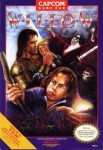 Before there was Lord of the Rings (the films, not the books) or Harry Potter, there was Willow. Co-produced by George Lucas and Ron Howard, and starring Warwick Davis (who had previously played as one of the Ewoks in Star Wars Episode VI) and Val Kilmer (long before he played his part in the destruction of the Batman film franchise in the mid 90s), Willow told the tale of a dwarf’s quest to rescue a baby from an evil sorceress queen. George had high hopes of Willow becoming Lucas’s fantasy equivalent to Star Wars, but it met low numbers at the box office and mixed reviews from critics. However, enough fans liked it enough for the film to gain cult status, and Capcom was fond enough of the property to release a pair of games based on Willow, one for the NES and the other for arcade.
 Like beat-em-ups, the light-gun shooter is a genre that gained most of its popularity during the 8 – 32 bit generations of gaming. However, as the mechanic is quite simplistic, the shooter genre has slowly been losing its appeal since its arcade heyday, just like the beat-em-up. Moreover, most light gun shooters can be completed in less than half an hour, making them shallow and light on content. To truly gain the attention of gamers, light gun games have to do something innovative and eye-catching. House of the dead featured zombies and showers of blood. Time Crisis featured a duck pedal, allowing players to seek cover and catch their breaths. Silent Scope featured a sniper rifle, and relied on precision and calculation rather than being a simple blast-a-thon. Police 911 (which really should be bought to Wii using the Wiimotion plus and maybe the balance board) translated player’s motions into onscreen action, getting the player’s body involved in the game.