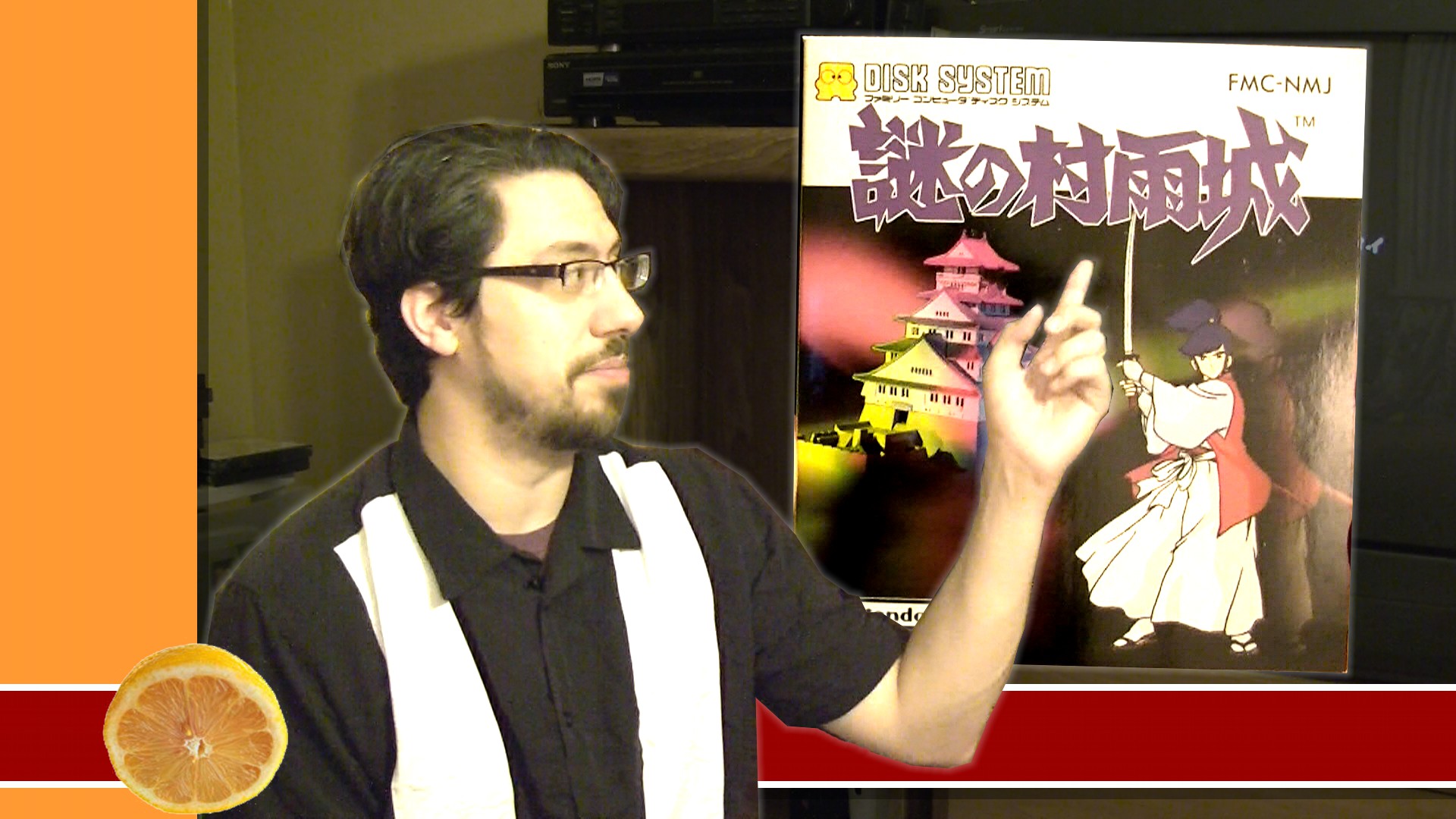
Famicom Dojo: Cartridges and Pins
by Sean "TheOrange" Corse, filed in Famicom Dojo, Nintendo, Powet.TV Show on Apr.24, 2008
After many moons and a three-part Tokyo Game Show special (and related coverage), Famicom Dojo is back with the fourth episode of our first season!
YouTube
Video Netcast
Subscribe to iTunes POWETcast
Famicom Dojo – Episode 04 – Cartridges and Pins
Chat with us on the Powet forums about this and other episodes in our official Famicom Dojo thread. Alternatively, feel free to leave a comment below!
Show notes:
Probably one of the coolest features of the Famicom is the ability for sound expansion. Nintendo’s solution was the FM Synthesis chip, but both Konami and Namco developed their own solutions, built into chips that could do other kinds of processing and memory management.
Below are the chips they developed, as well as the games that used them:
Konami
VRC6 [Wikipedia]
Akumajo Densetsu (Castlevania III: Dracula’s Curse) [Wikipedia]
Moryou Senki Madara
Esper Dream 2: A New Battle
VRC7 [Wikipedia]
Lagrange Point [Wikipedia]
Namco
NAMCO106 [Wikipedia]
Erika to Satoru no Yumebouken
Final Lap
King of Kings
Mappy Kids
Megami Tensei II
Rolling Thunder
Sangokushi 2
Youkai Douchuuki (did not use sound capabilities)
I find the Castlevania III story to be of particular interest. Unfortunately, most of the filming for the episode had been completed before I came across these game lists. That’s just as well, since I’m sure the story of Castlevania can probably take up an entire video (or two, or five) by itself — and would probably be better left to our resident Castlevania expert, Sindra. She’s already done the subject justice; check out her Dracula X Chronicles video review!
For more on the topics covered in this episode:
10NES Lockout Chip
Home Entertainment Suppliers (HES) Unidapter
Cartridge (electronics)
Episode Links:
The first three episodes of Season 1:
Famicom Dojo: Famicom and Disk System
Famicom Dojo: The Battery Backup
Famicom Dojo: Nintendo Has Moxie
Famicom Dojo Specials:
Famicom Dojo: TGS 2007 Special, Part 1
Famicom Dojo: TGS 2007 Special, Part 2
Famicom Dojo: TGS 2007 Special, Part 3


April 24th, 2008 on 10:29 am
Did Doc Brown teach you nothing?
Great episode, once again.
April 24th, 2008 on 1:09 pm
Graci for the plug and recognition. =D
I’ll have to actually get my hands on a copy of Akumajou Densetsu as opposed to the Dracula’s Curse I already have.
April 24th, 2008 on 2:10 pm
I can ask Vinnk to keep his eyes peeled for a copy (or two, so I can also have one). I imagine it was pretty popular, and so either difficult to find and/or quite expensive. That sort of challenge doesn’t discourage me, however. I’ll see what I can do.
April 25th, 2008 on 8:44 pm
I can get you a copy of the lose cart for $15 and one in the original box for $35.
April 25th, 2008 on 9:28 pm
You should really invest in a lapel microphone, camera microphones take away from the production value IMO.
April 25th, 2008 on 10:13 pm
hey, great show as always, fascinating stuff everytime i hear about it.
big into retro, in fact wishing more NES/SNES quality gaming could come to Wiiware, though i am sure it would be panned by the HD crowd, but the look and feel of the many timeless classics doesnt ever disappoint me. its incredible what they were able to do with so little back then.
cartridges really did allow for some unique things back then, like the FX chip on SNES, did sega have games with such extras on them?
April 25th, 2008 on 11:31 pm
These videos are great, thanks guys! I’m really enjoying reliving my childhood from an entirely different perspective… as well as LEARNING THINGS! Funducation!
April 26th, 2008 on 10:51 am
That’s pretty awesome stuff. Nice work!
April 27th, 2008 on 4:21 pm
Another good one. I agree that using the camera mic kind of detracts from things, and I think that a few of the jokes were a bit too forced (though still amusing enough), but the information provided (the heart of things, to be sure) was very interesting. Many thanks.
April 28th, 2008 on 8:46 am
I’d definitely prefer a lapel mic, but I gotta find one that does a stereo signal, or I’m going to have a fun time in post spreading the sound to the second channel, longer encoding times, etc etc…
And I suddenly find I prefer “funducation” over “infotainment”. Definitely.
April 28th, 2008 on 1:12 pm
sean, i always called it, edutainment, never heard of infotainment, nor funducation, and i like neither of those
edutainment combines better and you can tell what each part comes from, with funducation i dont get any idea what the second part is from.
April 28th, 2008 on 2:46 pm
Yeah. On second though, “funducation” sounds like “fundamental”, which is definitely not what I’m going for!
Edutainment works. Infotainment reminds me of infomercials. Blech.
April 28th, 2008 on 6:09 pm
Very interesting segment! I look forward to future episodes.
I also loved the TADA when opening up a nes cart to find out how small the insides were. I had opened up a Dragon Warrior cart (erm, gamepak) a while back, and was pretty surprised to find an adapter. I basically assumed they wanted to cut costs, as well as make the games larger, because back in the 80s, bigger meant better. Plus it allowed the packaging to be larger and take up more shelf space (but pc games beat em out on that, and look at all the good it did for them…)
July 26th, 2008 on 9:23 pm
You really redeemed yourself after the dismal Part 3; loved this one. And, I would like to add a little bit of my 2 cents in the technical department. Out of those 10 pins linked to the expansion slot, the 2 that are used for audio input/output are pin 51 on the NES, pin 45 on the Famicom(input) and pin 52 on the NES, pin 46 on the Famicom(output) for sound co-processors(by the way, you made an error on the page informing that Lagrange Point has the VRC6, it’s actually the VRC7, which is yet another FM synthesis chip based off the Yamaha YM2413). If you link the pins mentioned on the cartridge converter with a little bit of wire and some solder, you can get the sound co-processors to work on an NES, but as far as I know, the Top-loader NES doesn’t work, and maybe never will work, with any sound co-processors as some pins are missing on the slot, since, from what I can tell, all expansion hardware present in the Front-loader NES was removed from it(as well as A/V… yuck… but that’s an entirely different story).
Sucks that the previous Dojo Mailbag didn’t make it through this time around, however, I don’t have a name that can replace the old one. I actually liked it. Just… move it over to the end of the show.
November 20th, 2008 on 4:03 pm
Despite that I’ve taken four months to repsond to them, I really appreciate your comments. In fact, I’m looking for ways to demonstrate the pin soldering you mentioned just to see if I can get it to work.
A new episode is coming down the pipe which I hope strikes a better balance between the “edu” and “tainment” portions of that made-up word.
As for the VRC chip — I only JUST reviewed what you said, and I realized it was a typo; there’s already a VRC6 section above it. The one with Lagrange Point is SUPPOSED to say VRC7, but I must have copied and pasted it without incrementing the number. Oops! Thanks for catching that.
November 26th, 2008 on 12:56 am
[...] Show Notes Famicom Dojo: Cartridges and Pins @ Powet.TV [...]
November 26th, 2008 on 2:58 am
[...] Season 1 (so far): Famicom Dojo: Famicom and Disk System Famicom Dojo: The Battery Backup Famicom Dojo: Nintendo Has Moxie Famicom Dojo: Cartridges and Pins [...]
December 25th, 2008 on 2:23 pm
[...] Dojo: Famicom and Disk System Famicom Dojo: The Battery Backup Famicom Dojo: Nintendo Has Moxie Famicom Dojo: Cartridges and Pins Famicom Dojo: Microphone [...]
January 10th, 2009 on 9:57 pm
call the email orange bag.
December 29th, 2009 on 5:08 pm
I have most of the Famicom games that use sound expansion and with the NES Powerpak, you can FDS and I think VRC6 on a “Toaster” Front loader NES.
http://www.retrousb.com/product_info.php?cPath=24&products_id=34
You may need the latest mappers which can be found at retrousb.