

 PS3
PS3
 Famicom Dojo
 KEEP PLAYING
 KEEP PLAYING: Rewind
 Powet Toys
 Powetcast
 Hitchhiker's Guide POWETcast













Lost Classics: Willow (NES, Arcade)
by William Talley, filed in Uncategorized on Aug.21, 2009
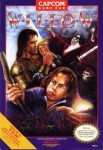 Before there was Lord of the Rings (the films, not the books) or Harry Potter, there was Willow. Co-produced by George Lucas and Ron Howard, and starring Warwick Davis (who had previously played as one of the Ewoks in Star Wars Episode VI) and Val Kilmer (long before he played his part in the destruction of the Batman film franchise in the mid 90s), Willow told the tale of a dwarf’s quest to rescue a baby from an evil sorceress queen. George had high hopes of Willow becoming Lucas’s fantasy equivalent to Star Wars, but it met low numbers at the box office and mixed reviews from critics. However, enough fans liked it enough for the film to gain cult status, and Capcom was fond enough of the property to release a pair of games based on Willow, one for the NES and the other for arcade.
[Read the rest of this entry…]
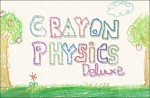 If you have been paying attention, you’ll notice that there is a revolution going on in gaming. The independent gaming scene has been getting bigger and bigger these past few years. Freely available open-source tools such as Gimp and Blender, as well as the accessibility of easy to learn programming languages such as Python and Blender have made game programming easier than ever, and there is more of an incentive for indie developers to get started as well. Microsoft’s Xbox Live Marketplace features sections for independently made games, while indie developed games such as Everyday Shooter, Braid, and Dishwasher: Dead Samurai have been swiped up by big name companies, releasing them on various download services to critical acclaim. These games are going way beyond DIY shooters and puzzle games, introducing unique methods of story telling and gameplay mechanics. Crayon Physics, developed by Petri Purho, is one of the most recent faces of the indie gaming movement. It won first place at the 2008 independent games festival, and it puts many mainstream-developed games to shame.
 The Guilty Gear series is a string of fast-paced fighting games first developed by Japanese company Sammy in 1998. During an age where Mortal Kombat and Street Fighter was still champions of the fighting games, with Killer Instinct on its way out and Soul Caliber and Super Smash Bros. on their way in, it was a hard time to be a thrown into the fray, so to speak. However, if there was one thing that Guilty Gear games could always capitalize on, it was speed. Probably the fastest fighting game to date, the sheer velocity of the game made it a favorite amongst button mashers.
 Like beat-em-ups, the light-gun shooter is a genre that gained most of its popularity during the 8 – 32 bit generations of gaming. However, as the mechanic is quite simplistic, the shooter genre has slowly been losing its appeal since its arcade heyday, just like the beat-em-up. Moreover, most light gun shooters can be completed in less than half an hour, making them shallow and light on content. To truly gain the attention of gamers, light gun games have to do something innovative and eye-catching. House of the dead featured zombies and showers of blood. Time Crisis featured a duck pedal, allowing players to seek cover and catch their breaths. Silent Scope featured a sniper rifle, and relied on precision and calculation rather than being a simple blast-a-thon. Police 911 (which really should be bought to Wii using the Wiimotion plus and maybe the balance board) translated player’s motions into onscreen action, getting the player’s body involved in the game.