

 PS3
PS3
 Famicom Dojo
 KEEP PLAYING
 KEEP PLAYING: Rewind
 Powet Toys
 Powetcast
 Hitchhiker's Guide POWETcast












$20 Game of the Week: Lost Planet – Extreme Conditions (PC, PS3, Xbox 360)
by William Talley, filed in $20 Game Of The Week, Games on Jun.30, 2009
 Lost Planet, along with Dead Rising, was part of Capcom’s strategy to make an impact on the Xbox 360 market, and it did, gaining critical acclaim for its fast-paced single player campaign and solid online multiplayer. Later on, the game was ported to PC (allowing cross-platform multiplayer with the Xbox 360 via the Windows live service) and PS3, although they received a somewhat lukewarm reaction compared to the Xbox game. A sequel to the game was recently announced, along with a movie (with a screenplay written by writer/voice actor David Hayter), so there is no better time than the present to explore the Lost Planet.
[Read the rest of this entry…]
 Throughout its limited lifespan, the Dreamcast didn’t have too many RPGs that made it over to American shores. However, the few it did have were classics. Grandia II was definitely one of them, and even after the premature death of Sega’s system it lived on through PC and Playstation 2 ports (although those two were a bit rough around the edges with the PC version containing several bugs and glitches). While it’s your standard Japanese RPG for the most part, Grandia II’s story, gameplay, and monsters help set this game apart from its peers. While it’s no Final Fantasy 7, genre fans will want to add this game to their collection.
 Bioshock is one of those games that you can’t pigeonhole into one category. Is it an FPS? While you play it from the first person viewpoint, and there are guns to shoot, you would be doing this game a great disservice if you write it off as a simple Halo-style blastfest. Is it an RPG? Well, the stat upgrade and skill development systems are almost as complex as any RPG skill tree. Is it a survival horror game? Well, there are things that are just as gripping and disturbing as any Silent Hill game. Considered a spiritual successor to Irrational games’ System Shock 2, BioShock is a blend of several different genres that features a powerful narrative, unique gameplay mechanics, and a breathtaking underwater setting.
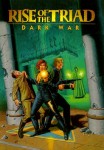 Remember the old days of the FPS genre? You know, Doom, Wolfenstein 3-d, Duke Nukem and such. This was back when you developers didn’t have to reinvent the genre with some fancy graphics engine, Havok physics, or even complex AI. No sir, all you needed was a gun and a bunch of enemies to shoot. Rise of the Triad is a lesser known relic from that era. Created by a subsection of Apogee developers known as the Developers of Incredible power, Rise of the triad was another fun early FPS blast fest. It also added a few unique tricks of its own to make it all the more enjoyable. I’m shocked that no one developed a console version of this game as they did with Doom and Wolfenstein.
 Beside Final Fantasy VI, Final Fantasy IV was my personal favorite of the 8 and 16-bit Final Fantasy games. Millions of other players enjoyed it as well, as it included an epic plotline, memorable characters, and top-notch RPG action. Following in the footsteps of Final Fantasy X, VII, and XII, Square has seen fit to expand on the universe of Final Fantasy IV with an all new sequel, The After Years. Originally released as a mobile phone title in Japan, Square has bought the title over here in an episodic format on Nintendo’s WiiWare service. The main title is available for 800 Wii points, while the chapter ‘Rydia’s Tale’ is available for 300. Subsequent releases will be released throughout the coming months for 300 Wii points each with the final chapter priced at 800 Wii points. You’ll reunite with old friends, meet new ones, and hopefully save the world one more time.
 The original Osman was a Turkish Sultan who established the Ottoman Empire and ruled it until his death in 1326. The Osman in this week’s Lost Classics is apparently the brother of Capcom’s Strider Hiryu who lives in a futuristic version of the middle east. He can crawl up walls, do flips, and dispatch enemies with the greatest of ease just like Capcom’s ninja. However, there is a good reason for this, as Osman was created by several former Capcom staffers, including Kouichi “Isuke” Yotsui, who also created Strider.
 When one discusses the glory days of the forth generation of console gaming (that would be the Super Nintendo and Sega Genesis), one must be careful to exclude SNK’s Neo Geo from the discussion. Between the 16 and 32 bit systems in power, the Neo Geo console’s hardware was unique in that it allowed gamers to play the actual arcade games since it was powered by the actual MVS and AES boards. You weren’t playing versions that had to sacrifice graphical quality to fit within a home system’s specs, nor were you playing versions that had extra features crammed to compensate for being inferior to the arcade game, but the Neo Geo allowed you to play the same game that you played in the arcade, minus the coin slot and the fat guy at the counter who breaks your $20. With a memory card, you could even carry save data between the arcade cabinet and a home console.