

 PS3
PS3
 Famicom Dojo
 KEEP PLAYING
 KEEP PLAYING: Rewind
 Powet Toys
 Powetcast
 Hitchhiker's Guide POWETcast













Lost Classics: Shadow of the Ninja (NES)
by William Talley, filed in Uncategorized on Aug.27, 2009
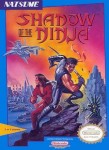 What if the old-school NES Ninja Gaiden games were two players? Well, they would have played a lot like Natsume’s NES game Shadow of the Ninja. Taking control of either Hayate or Kaede (or both in 2 player mode), your goal is to stop an evil emperor named Garuda, who has taken over New York City in the year 2029 A.D. You’ll travel through 5 stages, each broken into several different subsections. The two ninjas have minor gameplay differences, and they can collect powerups and weapons. Although they can’t climb on walls like in Ninja Gaiden, they can hang on railings. While it may not have been anything players haven’t seen before, Shadow of the Ninja was an excellent game, and you could enjoy it with a friend too. Hopefully Natsum will try to get this game on Virtual Console, as fans of Ninja Gaiden will enjoy it.
Fun Fact: Speaking of Ninja Gaiden, the Game Boy entry of the series, Ninja Gaiden Shadow, was originally intended to be a Game Boy release of this game. Tecmo bought the rights to it from Natsume, and re-christened it into a Ninja Gaiden game, hence the game having a similar plot and gameplay to Shadow of the Ninja, along with some continuity questions.
 When Devil May Cry debuted on the Playstation 2 years ago, it gave a new face to the action genre while providing an old-school vibe. It was like nothing gamers had ever seen before, but at the same time, you got a feeling of nostalgia just like you did when you played Castlevania or Ninja Gaiden back on the Nintendo. Devil May Cry helped set the trend of the action genre for years to come. Its fast paced action, upgradable abilities, and combo-heavy combat system helped lay a blueprint for games like Ninja Gaiden and God of War. The series almost went under due to a lackluster second entry, but a third game redeemed the series, even if it was brutally difficult. Now DMC goes next gen, and also makes its first appearance on the Xbox 360. Although DMC 4 treads familiar territory, it manages to provide a few surprises of its own, not the least of which is an all new playable character.
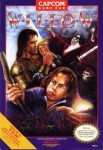 Before there was Lord of the Rings (the films, not the books) or Harry Potter, there was Willow. Co-produced by George Lucas and Ron Howard, and starring Warwick Davis (who had previously played as one of the Ewoks in Star Wars Episode VI) and Val Kilmer (long before he played his part in the destruction of the Batman film franchise in the mid 90s), Willow told the tale of a dwarf’s quest to rescue a baby from an evil sorceress queen. George had high hopes of Willow becoming Lucas’s fantasy equivalent to Star Wars, but it met low numbers at the box office and mixed reviews from critics. However, enough fans liked it enough for the film to gain cult status, and Capcom was fond enough of the property to release a pair of games based on Willow, one for the NES and the other for arcade.
 If you have been paying attention, you’ll notice that there is a revolution going on in gaming. The independent gaming scene has been getting bigger and bigger these past few years. Freely available open-source tools such as Gimp and Blender, as well as the accessibility of easy to learn programming languages such as Python and Blender have made game programming easier than ever, and there is more of an incentive for indie developers to get started as well. Microsoft’s Xbox Live Marketplace features sections for independently made games, while indie developed games such as Everyday Shooter, Braid, and Dishwasher: Dead Samurai have been swiped up by big name companies, releasing them on various download services to critical acclaim. These games are going way beyond DIY shooters and puzzle games, introducing unique methods of story telling and gameplay mechanics. Crayon Physics, developed by Petri Purho, is one of the most recent faces of the indie gaming movement. It won first place at the 2008 independent games festival, and it puts many mainstream-developed games to shame.
 Like beat-em-ups, the light-gun shooter is a genre that gained most of its popularity during the 8 – 32 bit generations of gaming. However, as the mechanic is quite simplistic, the shooter genre has slowly been losing its appeal since its arcade heyday, just like the beat-em-up. Moreover, most light gun shooters can be completed in less than half an hour, making them shallow and light on content. To truly gain the attention of gamers, light gun games have to do something innovative and eye-catching. House of the dead featured zombies and showers of blood. Time Crisis featured a duck pedal, allowing players to seek cover and catch their breaths. Silent Scope featured a sniper rifle, and relied on precision and calculation rather than being a simple blast-a-thon. Police 911 (which really should be bought to Wii using the Wiimotion plus and maybe the balance board) translated player’s motions into onscreen action, getting the player’s body involved in the game.
 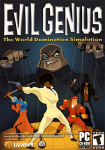 While playing this weeks $20 GOTW, I’ve come to realize something. There aren’t nearly enough games that allow you to step into the shoes of a criminal mastermind. Yeah, Grand Theft Auto and Saint’s Row allow me to craft a criminal empire and run a city, but even then I’m just playing as a gangster with a heart of gold. I wanna build a secret island base, chock full of henchmen that will lay their lives down for me on my say so. I wanna send my soldiers out to put in work across the world. I wanna capture, interrogate, and kill civilians and secret agents who snoop around my base. I wanna have a badass second-in-command who swears complete allegiance to me. I wanna instill fear in my workforce by killing one of my more incompetent workers right in front of them, Saddam Hussein style. Thankfully Elixir Studios recognizes the void of villain simulators. In 2004, they released this title, which places players in the wold of an evil genius as they try to achieve world domination.
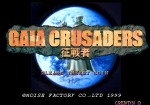 I love a good beat-em-up. I know they get looked down upon these days, but few things relieve stress better than beating up busloads of thugs, mutants, mobsters, robots, ninjas, samurai, terrorists, dominatrices, zombies, hippies, republicans, and god knows what else. From Final Fight and Double Dragon to Streets of Rage and Sengoku, the beat-em-up genre has seen scores of great titles. One of the best and most unknown entries in the genre is this little known title from Neo-Geo developer Noise Factory. Taking control of one of 5 characters, you make your way through a post-apocalyptic world, battling demons and mutants. While it doesn’t do anything that hasn’t already been seen in the genre, it has some excellent graphics and a awesome soundtrack. While there is little chance of this game showing up on any home system anytime soon, this is definitely something you’ll want to pump quarters into if you come across it in the arcade.
 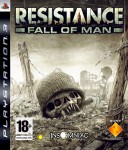 Regardless of what anyone says, the Playstation 3 (along with its competition the Wii and the Xbox 360) is a very good system, and anyone who says that Sony, Nintendo, or Microsoft is dying anytime soon is an idiot. However, the problem with the system is is that when it was first released, there were hardly any games available for it. Scratch that, there were plenty of good games, but they were already available for Xbox 360, and in many cases, they had been available for the better part of the year prior to the system’s release. Even with new features, people weren’t exactly rushing out to pay $500 – $600 just to play a new version of Fight Night or Marvel Ultimate Alliance when they could already play them on Xbox 360, and the few exclusives that the PS3 had at system launch weren’t exactly anything to write home about. However, is there was one game that was worth the price of the new system, it’s this FPS classic from Insomniac. In fact, this game along almost makes it mandatory to own a PS3.